


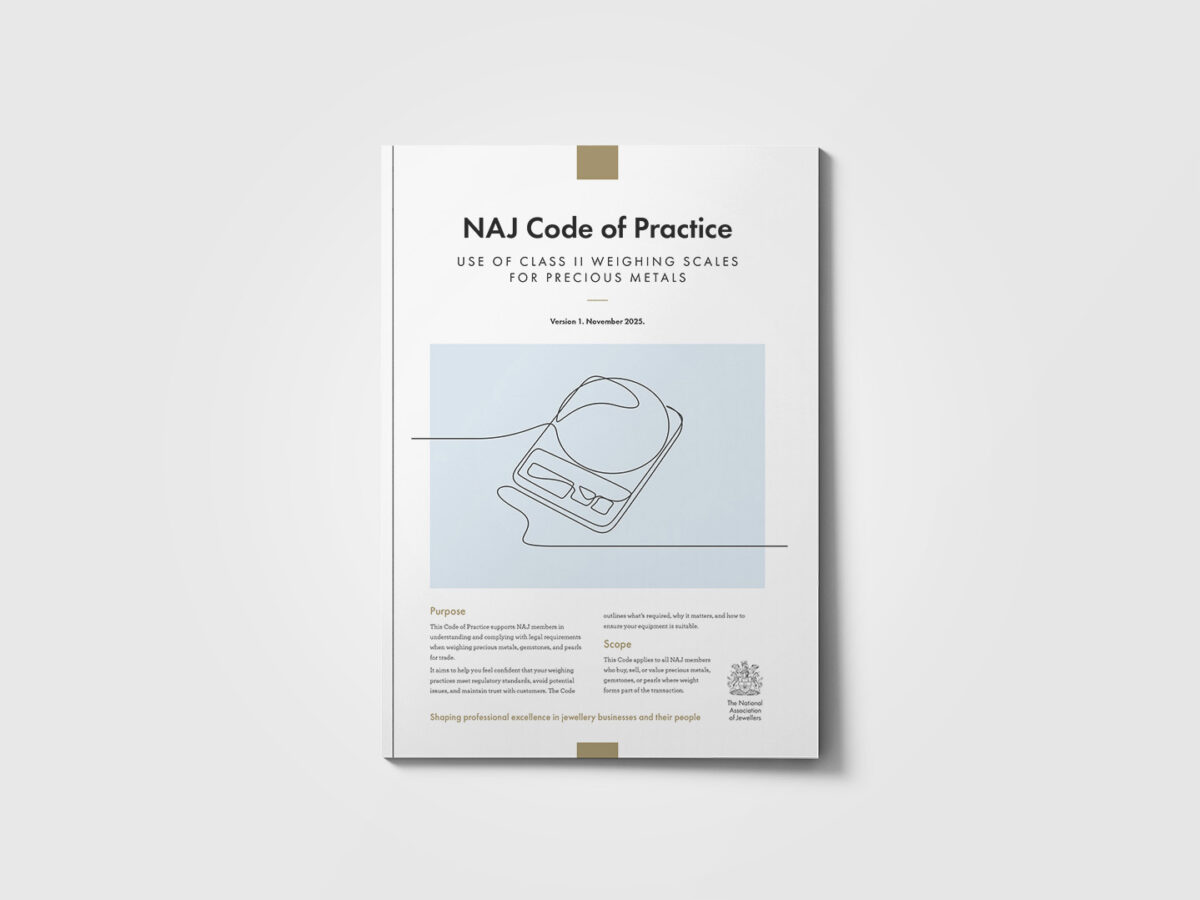

The National Association of Jewellers (NAJ) has published an updated Code of Practice to support jewellery businesses in meeting legal requirements for weighing equipment when dealing with precious metals and gemstones.
The revised guidance was developed with the input of Trading Standards, which requested clearer direction for the sector.
Guidance on Equipment Compliance
The Code of Practice sets out what jewellers must look for when using weighing instruments, including the required approvals and markings. It also explains the importance of using correctly calibrated instruments, particularly Class II instruments, and highlights how their compliance may be affected by the equipment’s location or relocation.
The update addresses common compliance issues, such as the use of non-approved or relocated weighing devices without re-verification. To assist businesses, the Code includes examples of approved data plate markings that meet legal standards.
Clarifying Legal Requirements
Katie Gillespie, compliance and policy manager at the NAJ, said: “We know that weighing precious metals and stones is an essential part of many jewellery transactions, but the legal requirements can be complex and are often misunderstood. “Trading Standards approached the NAJ to develop clear, industry-specific guidance. The Code of Practice is intended to assist businesses in maintaining compliance with legal requirements and standards.”
The full Code of Practice is available via the NAJ’s website.
